

loader image

Fuel Cells and Drive Systems

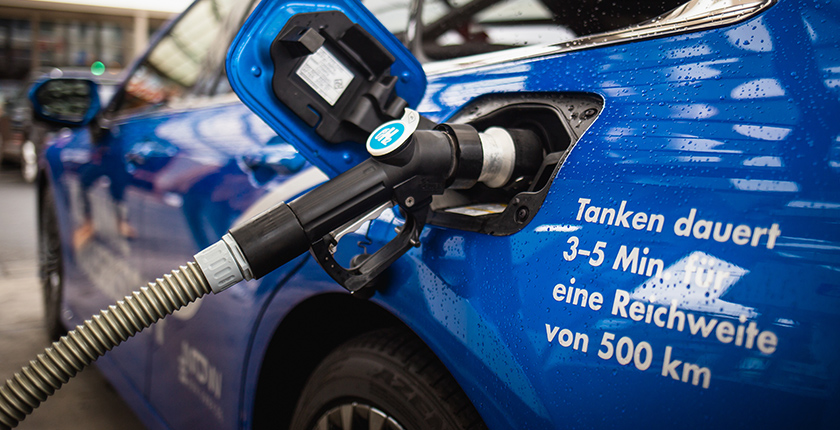
While the use of hydrogen in combustion engines is still at the prototype stage, fuel cell technology for vehicle propulsion is already well developed and has been successfully demonstrated in real-world applications.

At the EU level, fuel cells must comply with ATEX requirements, which are implemented nationally in Germany through the Explosion Protection Ordinance (11th Product Safety Ordinance). The Pressure Equipment Directive is also relevant (transposed nationally via the 14th ProdSV and at EU level via Directive 2014/68/EU). In addition, the Low Voltage Directive and the General Product Safety Directive apply. These directives are implemented in Germany through the Product Safety Act (ProdSG) and the 1st ProdSV.
The Machinery Directive is implemented via the ProdSG and the 9th ProdSV.

Materials used in fuel cells are subject to the German Hazardous Substances Ordinance (GefStoffV) and the European REACH regulation on chemicals.

To prevent damage to fuel cells, it is essential to ensure adequate hydrogen quality. For more information, please refer to our pages on hydrogen quality and odorization.

Basic Fuel Cell Types

The IEC 62282 Standardisation Series

Special Features for Mobile and Stationary Applications

Combustion-Powered Hydrogen Vehicles

Fuel Cells

Currently, there are five particularly important types of fuel cells. The alkaline fuel cell (AFC) is the oldest type and was first used in the 1960s in space applications. It belongs to the category of low-temperature fuel cells.

Also classified as a low-temperature fuel cell is the polymer electrolyte membrane fuel cell (PEMFC). It generally outperforms the AFC in terms of power output and durability. Today, the PEMFC is by far the most widely used fuel cell type, primarily in mobility applications.

In contrast, the phosphoric acid fuel cell (PAFC) is used in large stationary systems and small-scale power plants. It operates in the medium temperature range, which allows it to reach an overall efficiency of up to 80% when combined with a combined heat and power (CHP) system.

The molten carbonate fuel cell (MCFC) and the solid oxide fuel cell (SOFC) belong to the category of high-temperature fuel cells. The MCFC requires a significant amount of space and is therefore produced in limited quantities for use in the power generation sector. By integrating a downstream thermal power cycle, the MCFC can achieve efficiencies of up to 85%. Unlike other fuel cells, the SOFC uses a solid electrolyte. It can also reach an overall efficiency of up to 85% (including CHP) and has, in recent years, become the second most important fuel cell type due to its low investment cost and long service life.

For the use of fuel cells in combined heat and power systems, the relevant standard is DIN EN 50465: “Gas appliances – Appliances for combined heat and power production with a rated heat input not exceeding 70 kW.” This standard specifies requirements for construction, safety, usability, energy efficiency, and labeling of micro-CHP units.

Relevant Standards

The DIN EN 62282-x-xxx series (internationally: IEC 62282) is an important set of standards titled “Fuel Cell Technologies”. It was developed by IEC/TC 105 and is continuously updated.

The individual parts of the series cover different topics:

DIN EN 62282-1-xxx: Terminology
DIN EN 62282-2-xxx: Fuel cell modules
DIN EN 62282-3-xxx: Stationary fuel cell power systems
DIN EN 62282-4-xxx: Fuel cell propulsion systems
DIN EN 62282-5-xxx: Portable fuel cells
DIN EN 62282-6-xxx: Micro fuel cell power systems
DIN EN 62282-7-xxx: Test methods
DIN EN 62282-8-xxx: Energy storage systems using reversible fuel cell modules.

All sections of the standard series may include additional specific topics as needed. One example is DIN EN 62282-x-100, which defines safety requirements. The numbering of further parts is not entirely uniform. For example, DIN EN 62282-3-200 and DIN EN 62282-6-200 cover performance testing procedures. In contrast, in the DIN EN 62282-4-xxx series, performance testing is defined in DIN EN 62282-4-102 and DIN EN 62282-4-202.

Mobile and Stationary Fuel Cells

For mobile and portable fuel cell power systems, the DIN EN 62282-5 series applies. So far, it includes only DIN EN 62282-5-100, which defines safety-related aspects of mobile fuel cells. From a regulatory perspective, mobile fuel cells fall under the requirements of the Ordinance on Transportable Pressure Equipment (ODV). As part of the 2024 Hydrogen Standardization Roadmap, a general safety standard applicable to all mobile applications was identified as a need. Such a standard would help avoid a fragmented regulatory landscape in this area. It could serve as a foundation for developing specific safety standards for individual types of mobile applications.

The DIN EN 62282-3-xxx series covers various aspects of stationary fuel cells. For example, DIN EN 62282-3-100 defines safety requirements, DIN EN 62282-3-200 describes performance testing procedures, and DIN EN 62282-3-300 addresses the installation of fuel cell systems.

H2 Combustion Engine

As a bridging technology until the widespread adoption of fuel cell vehicles, hydrogen internal combustion engine vehicles (H-ICE) are intended to serve as an interim solution. Existing supply chains are being leveraged to bring hydrogen-powered vehicles to market as quickly as possible. However, compared to fuel cell systems, this type of propulsion is less efficient, emits nitrogen oxides, requires additional components such as a transmission, and generates more noise.

The fiscal differences between FCEVs and H-ICE vehicles were examined in a study conducted by the German Hydrogen and Fuel Cell Association (DWV).

Haftungsausschluss

Trotz der Sorgfalt, die bei der Erstellung dieser Website beachtet wurde, gilt folgender Haftungsausschluss: Die Informationen auf dieser Website werden in ihrem derzeitigen Zustand zur Verfügung gestellt, und es wird keine Garantie oder Gewährleistung dafür übernommen, dass die Informationen für einen bestimmten Zweck geeignet sind. Der Benutzer verwendet die Informationen auf sein eigenes Risiko und Haftung. Die Informationen und die RCS Datenbank spiegelt die Ansichten der Autoren und Fachexperten wider. Die NOW GmbH haftet nicht für die Verwendung der hierin enthaltenen Informationen.

Disclaimer

Despite the care taken in creating this website, the following disclaimer applies: The information on this website is provided “as is” and no guarantee or warranty is given that the information is suitable for a particular purpose. The user uses the information at his own risk and liability. The information and the RCS database reflect the views of the authors and subject matter experts. NOW GmbH is not liable for the use of the information contained herein.